Neurodiversity acceptance will grow by using peacebuilding tools in 2024! This is more than becoming a “neurotribe advocate”. A peace process means overcoming internal divisions in the neurodiversity movement. Overcoming internal divisions in the neurodiversity movement means caring how we all fit together.
A peace process focuses on what is good for the whole. All neurotribes fit together in our neurodiversity movement when we apply the new science of change to the human process of growth and resilience. We organize our neurodiversity movement for peacebuilding by using systems thinking tools based upon this new science.
2024 is a great year for the neurodiversity movement to learn and teach others how to adapt to the inevitable stresses of life. Research and assessments have been proving for decades that we all belong to what has often been called a “neurotribe”. Despite this, our neurodiversity movement stays bogged down.
System Unity: A Peacebuilding Environment
Scientific thinking tells us why our neurodiversity movement stays bogged down and how 2024 can be different. Peacebuilding tools are now available to help us dialogue, forgive, and build trust. The science of change affirms that human systems with adaptive potential for the future are the ones that have system unity.
Without unity, neurodiversity movement leaders tend to focus on our part of the larger system. Without unity, we stay distracted by the challenges of our part of the whole. Eventually, we tend to forget how we all used to fit together.
Overwhelming stress is never a good thing. Not for our brains, our bodies, our spirits, our ability to learn… or our ability to lead. Regardless of our neurotribe, we can get stuck by too much, too little, or misplaced attention to stress cues in our environment.
Overwhelming stress has caused some of our best leaders to give up. When stress cues in our environment become overwhelming, occupational burnout is the natural result. Empathic leadership is the key to our neurodiversity movement but, we must use empathy as our strength to overcome the stress that it can cause.

As we share neurodiversity movement stories during 2024, each neurotribe of our human tribe can be viewed as a part of the greater whole. This unified view supports our neurodiversity movement. It does so in many ways but today, I will focus on three.
Three Scientific Principles of Human System Unity
First, a sense of unity allows us to overcome stress reactions when we sense deeper-than-personality differences in others. Stress reactions are fueled by what neuroscience experts call interoception and what our parents used to call our sixth sense (https://www.psychologytoday.com/us/blog/between-cultures/202208/understanding-interoception-the-sixth-sense). None of us like the feeling of not fitting in and so, we naturally avoid that feeling. The new science of change explains why a sense of unity is so empowering.
Second, a sense of unity allows us to understand neurotribe differences and similarities without judgment. This is true even when we are debating with a person from a neurotribe that we sense might lack empathy. Research has affirmed that interoception causes us all to feel happier with people who feel like “us”. This is for the same reason that we tend to feel happier in beautiful environments. It’s all due to interoception and its relationship to our human experience.

Third, a sense of unity allows us to accept that we all have what psychologists call illusions of causality. Illusions of causality means that we each see relationships between parts of our life experience from our unique point of view. This explains why a willingness to change is needed to build a social environment for peacebuilding. A peacebuilding environment needs to be one in which everyone has equal voice, identity, and power.
Unique life experiences may be felt or sensed differently by people in different neurotribes but the stress response is the same. Tiny stress reactions cause us to avoid environments in which we feel like we don’t fit. Our growth and resilience are blocked when we stay away from those environments because our actions are being constrained by our emotions.
When we enter environments that feel unfamiliar or unfriendly, we use coping mechanisms. Then our voice grows stronger as we learn how to fit in. This happens because we learn from the illusions of causality that we all have. By learning from everyone, we develop ways to work together in teams and eventually how to promote needed human system change.
Sharing our Peacebuilding Stories
Peacebuilding tools that apply the science of change are ideal for promoting human growth and resilience. I will share my practice stories in future blogs. I hope others will share them too.
The Human Systems Dynamics (HSD) Model I use for peacebuilding is called interdependent pairs. It is a simple process model of what empathic leaders do all the time to overcome human differences. The HSD Interdependent Pairs Model takes what we do intuitively and focuses it into a strategic adaptive action plan (https://www.hsdinstitute.org/resources/interdependent-pairs.html#:~:text=Interdependent%20Pairs%20is%20a%20model,no%20clear%20one%2Dway%20consideration).
Tensions between interdependent pairs are naturally divisive. I’ve learned how easily they can get program design and development teams stuck. This is because human system change is always hard.
I notice human change is hard when I am treating children with sensory processing differences. I notice human change becomes harder over the lifespan. However, I notice that positive changes can even happen during occupational therapy treatments with elderly clients who have dementia. I promote this by reducing the internal tensions they feel during treatment. I do this by using therapeutic multi-sensory environments and the principles of neuroplasticity (https://attunementsolutions.com/blog/sensory-entrainment-is-the-question-and-we-have-the-answer/).
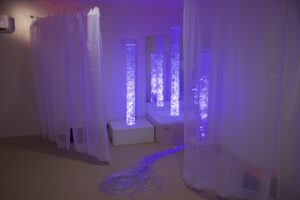
In this first blog of 2024, I considered sharing practice stories of my successful use of the HSD Interdependent Pairs Model in occupational therapy practice, therapy program design/development, and in my leadership role at Attunement Solutions (https://attunementsolutions.com/). Then I realized that my overarching goal is for other neurodiversity movement leaders to start sharing your peacebuilding stories too. I want my blogs this year to be an open space for us all to share our neurodiversity peace process stories.
Wishing everyone a happy start to 2024! I look forward to us sharing stories over the coming year!