
This is a US Healthcare System reframing story. It begins with an old paradigm story and uses new paradigm science to cut through thought-boundaries from the past. This is the way we reframe old paradigm stories that were once viewed as unrelated, random events. Now we know those old paradigm stories have the characteristics of social chaos. This is a new paradigm scientific investigation into the past.
This dynamic systems analysis occurred using readily available data from the internet spanning from 1960 to 2024. Although it is a three-cycle complex adaptive system self-organization story, strong focus was on analyzing the first conditions of this 64-year-long drama (https://attunementsolutions.com/blog/our-power-to-change-things-and-the-joy-of-neurodiversity/). This is the new paradigm scientific-thinking way to solve complex problems.
This story ends with three guiding principles for a new role that every new paradigm healthcare organization will want to add. That is the role of a Chief Experience Officer. By following these 3 Guiding Principles, our US Healthcare System’s new paradigm story can be an adaptive action story fit for a rapidly changing world (https://www.hsdinstitute.org/resources/adaptive-action.html). Gone will be the too-stable structure that has blocked positive change in the past.
A Drama Began: Creativity Unleashed
Complex Adaptive Systems Follow Stretch Patterns During Each Self-Organization Cycle
Electronic Health Records is the lead character in our story. The lead character is called EHR for short. We join the story before EHR was born.

In the early 1960s, US technology, business, and healthcare sectors started putting their heads together. Together they constructed a promising vision for the future of EHR in America. EHR would serve both patients and physicians by increasing operational efficiency and safely delivering each patient’s medical records before their first visit.
This felt like a win-win to the EHR design and development team. Doctors would have more time to prepare for patients. New patients would be better served. First visits (like new referrals to specialists) would flow more smoothly.
The feel of a complex adaptive system’s pattern stretch phase. Each step forward felt slow and laborious for the EHR design and development team. Many prototypes were needed for reaching project goals. Business experts were sure that business investors would support this project. They knew venture capital funds would be available as seed-money.
The team assumed the technology sector would know how to make medical records more secure and how to decrease medical record errors. The US Healthcare System went about its business during the 1960s. It was focused on defending America during an especially turbulent decade. Today’s story stays focused on turbulence that was directly related to EHR’s life story.
EHR was born. EHR was born in 1972 and was developed by the Regenstreif Institute in the United States. Regenstreif Institute builds tools and develops system models for improving patient lives and increasing healthcare system efficiency. It is closely associated with the Indiana University School of Medicine.
The US Healthcare System kept picking door number two. In this new paradigm scientific investigation into the past, door number two stands for a one-way exchange or defense-control position. This type of defense-control position is called the hands-off public policy. The EHR design and development team explained to them how EHR would solve healthcare system problems of that era.
The US Healthcare System stayed distracted. There was a lot of distracting social chaos left over from the 1960s. The federal government’s war on drugs started in 1971. But that’s not the social chaos that baffled the EHR design and development team or early seed-money investors.
The social chaos that baffled them began with divisive interdependent pairs. The social chaos that baffled the team was the drastic increase in medical malpractice lawsuits that had started in the 1960s. It was baffling because it felt like EHR was the answer to everyone’s problems. I can imagine the EHR design and development team’s confusion about the US Healthcare System’s slow uptake of their product.
There were five medical malpractice cases leading to settlements of at least $2 million dollars during the 1960s. This was the greatest frequency of lawsuits and the highest money settlements at that point in history. Physicians were understandably alarmed.
The highest medical malpractice case settlements in the 1960s were because children were being born with cerebral palsy due to medical errors. Parents were understandably alarmed about that. Today’s dynamic systems analysis uncovers a tension-generating interdependent pair that was developing. New paradigm scientists know that the physician-parent interdependent pair, can naturally generate society-wide chaos.
Physicians were concerned about the increase in medical malpractice lawsuits for their reasons. Parents were concerned about the increase in medical malpractice lawsuits for entirely different reasons. Court cases and legal decisions were often reported on the evening news. Polarized opinions on social issues increased society-wide tensions between interdependent pairs.
Don’t look up. “Don’t Look Up” is a 2021 Netflix movie that is a satire of the feelings that people have during a complex adaptive system pattern stretch phase like was being experienced by the EHR creative team. In this movie, two astronomers can’t believe that nobody takes them seriously when they warn that a comet is heading directly for planet Earth. Satires are filled with the irony that comes from the feeling of paradox (https://attunementsolutions.com/blog/neurodiveristy-movement-needs-new-paradigm-science/). Paradox is a characteristic of social and especially society-wide chaos.
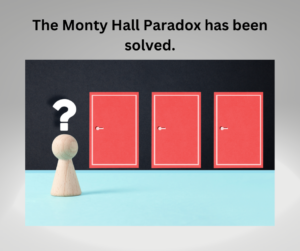
When we keep finding a goat behind door number two, the other two doors hold an equal chance for success. We will call the interdependent pair that generated this feeling of irony in today’s story, the system innovator-defensive system interdependent pair. I can hear the technology sector saying, “if we put the right data into the right hands at the right time… we can solve your medical error problems”. Yet, the uptake was slow, and the US Healthcare System didn’t invest in EHR until cycle three of this three-cycle story.
Business sector investors in EHR must have thought, “Everyone will jump on tools and models with the power to improve healthcare system efficiency and quality of patient care. It’s a win-win!” To be fair, 24/7 access to funds through internet banking didn’t happen until 2003 but, this dynamic systems analysis shows the social chaos that naturally develops when innovation meets a system taking a too-stable defense-control position.
Stretch Patterns Are Followed by Fold Patterns After a Complex Adaptive System Self-Organizes or Forms a New Shape
Avoidance of risk and first costs are two commonly cited reasons for taking a defense position. By 1996, the US Healthcare System’s hands-off public policy was considered by some to show human system intelligence. To others, its actions brought the US Healthcare System’s collective intelligence into question. This is the way it always is with public opinion during society-wide chaos. Personal perspectives tend to get polarized (https://attunementsolutions.com/blog/the-neurodiversity-movement-a-transformative-start/).
The feel of a complex adaptive system’s pattern fold phase. Eventually, the advantage shifted to the EHR design and development team. Changes came fast during this phase of growth and development. Large healthcare organizations across America started buying EHR technology and software. Business sector stock investors were delighted.
Complex adaptive systems generated and accumulated chaos while self-organizing. The reason new paradigm scientists say self-organizing complex adaptive systems are on the edge of chaos is illustrated as this drama unfolds. We might think of this point in our story as a phase transition. A phase transition is what happens when a complex adaptive system totally changes its shape without losing its inherent patterns.
Complex adaptive systems self-organize into new shapes by adapting to new system differences or conditions. That’s exactly what happened when EHR started having exchanges across differences in real world social environments. Most people hadn’t considered the possibility that EHR patterns could take new shapes.
Very few people understood the difference between open and closed systems. Most people didn’t know what was happening when a system they had viewed as machine-like started changing shape so that it was organism-like. This is what happened as soon as EHR started having exchanges within real world social environments that had differences.
The US Healthcare System shifted to door number one. In this story, door number one stands for a different defense-control position. This type of defense-control position is called political-response government action. That was the year that the US Department of Health and Human Services (HHS) issued the Health Insurance Portability and Accountability Act of 1996 (HIPAA).
Don’t look up. For many Americans, the HIPPA debate didn’t even begin until about 2003. They had been focused on other things and HIPPA was a word they heard on television that sounded a lot like hippo. That was about to change.
This is another example of the “Don’t Look Up” phenomenon. It’s not only the system innovator-defensive system interdependent pair that creates enough paradox to be experienced as irony. This same feeling happened due to the government decisionmaker-US citizen interdependent pair.
Without going into detail about Cycle II of this three-cycle story, the UCLA Medical Center is sometimes called Ground Zero in Celebrity-HIPPA-Failures of the early 21st century. That was the site of the first HIPPA misdemeanor and the first batch of devastating celebrity HIPPA violations. This got the country’s attention like nothing had before.

Complex Adaptive System Patterns Continued to Self-Organize into Society-wide Chaos
Without performing an extensive analysis of Cycles II and III of this three-cycle story, a high-level dynamic systems analysis shows too-stable patterns in need of change in all US Healthcare System actions over this 64-year-long story. After 1996, some parts of HIPPA went into effect at once and others took up to ten years with lots of revisions. This new paradigm scientific investigation into the past shows only defense-control or one-way exchanges from the federal government.
The US Healthcare System stayed with door number one. It’s true that in this story, door number one stands for a political-response government action but there are two forms of that pattern. In the earlier example, the US Healthcare System’s response was to craft federal regulations. In 2009, it acted in a different way.
This door number one response was the action of pouring $27 billion (about $83 per person in the US) into initiatives to promote acceptance and improve training programs in HIPPA-informed EHR. This was designed to help hospitals and healthcare organizations switch to EHR more easily… only 35 years after its birth. When new paradigm scientists use the term too-stable structure, this story illustrates what they mean (https://attunementsolutions.com/blog/a-new-paradigm-role-for-social-entrepreneurs/).
The US Healthcare System stayed with door number one. Reiterative cycles of political-response government action led up to the year 2013 when the HIPAA Omnibus Final Rule went into effect. Analysts later said that HIPPA wasn’t effectively enforced until this regulation went into place. The next chapter provides another system-wide pattern illustration of the US Healthcare System as a too-stable structure.
Every Chaotic Pattern Stretches and Folds in Response to a Too-Stable Structure
Complexity science and chaos theory (together) are called the science of change. New paradigm scientists understand social change and the chaos it can produce quite differently than government decisionmakers in this old paradigm story. They know that systems like EHR (that previously looked machine-like) have the ability to change shape when they enter open systems like real world social environments.
New paradigm scientific research shows that societies tend to split or become polarized when they meet society-wide interdependent pairs. They understand that it feels impossible for these polarizations to be reconciled when viewed as unrelated, random events. Thankfully, the science of change taught us a lot about force-counterforce patterns in chaotic systems.
- Not a random event. It follows the patterns of society-wide chaos. Since the world is always changing, cyber-attacks have become bigger and more sophisticated in the years since Cycles I and II of this three-cycle story. That is to be expected when a too-stable system is only using a defense-control position. One-way exchanges or defense-control actions don’t work for changing the inherent patterns of a self-organizing complex adaptive system. In 2015, America experienced one of the largest EHR data leaks in history. 2015 was the year that Anthem, Inc had medical information stolen from close to 80 million people (about twice the population of California). A class-action lawsuit led to a $115 million settlement for victims. Anthem was forced to pay $16 million in penalties to the US Department of Health and Human Services (HHS) Office for Civil Rights (OCR).
- Not a random event. It follows the patterns of society-wide chaos. Celebrities continued to be a high target for medical record leaks such as Ed Sheeran in 2017 and Jussie Smollett in 2019. These are examples of how complex adaptive systems create society-wide chaos through repetitive patterns or by generating repetitions.
- Not a random event. It follows the patterns of society-wide chaos. After George Floyd was pronounced dead at Hennepin County Medical Center in Minneapolis in late May of 2020, several employees (who had no cause) reviewed his medical records. This is an example of how society-wide chaos changes shape but keeps inherent patterns.
- Not a random event. It follows the patterns of society-wide chaos. Also in 2020, unauthorized reports were leaked on NFL and NBA Players who tested positive for COVID-19. This is another example of how society-wide chaos creates new patterns with self-similarity. Hefty settlements have now been awarded for sports careers that were dramatically changed due to unauthorized release of medical information. These are examples of how society-wide chaos creates new patterns through close social network interconnections.

Not a random event. It follows the patterns of society-wide chaos. An ABC documentary that included footage from Boston hospital emergency rooms aired videos of patients that were filmed without legal consent. This resulted in HHS fines totaling nearly $1 million for three well-respected Boston hospitals. This is an example of the power of fast feedback loops (in the form of ABC documentary creation, distribution, and viewer reception-responses) that has come full circle to penalize three healthcare organizations that previously had stellar reputations.
New Paradigm Solutions: Door Number Three Government Response Options
A second form of dynamic systems analysis was used in this new paradigm scientific investigation into the past. In 1972, Regenstreif Institute acted as an organizational container that brought diversity together for birthing EHR in the form of US technology, business, and healthcare sector collaborations. I used Containers, Differences, Exchanges or CDE analysis to propose a way to shift current chaotic patterns.
I call these 3 Guiding Principles of a Chief Experience Officer. CDE analysis recognizes that complex adaptive system unity is only sustained in a shared container when differences across exchanges are not considered a problem (https://hsdinstitute.org). This dynamic systems analysis shows that is not currently the case and that a new healthcare organization leadership position is needed to reframe or balance the physician or healthcare system-patient interdependent pair.

Guiding Principle 1: What? Staying flexible or adaptive protects us from getting stuck in hard-to-change patterns.
Technology and business sectors knew that fast feedback loops provided healthcare system advantages during EHR’s development. This story analysis shows that the US Healthcare System has become increasingly vulnerable by assuming a too-predictable defense-control position. Today’s social environments are open systems with continuous fast feedback loops and that is ideal for generating and spreading chaos. The US Healthcare System and healthcare organizations will receive help in the future by remembering that human systems dynamics or dynamic systems research has shown the benefits of staying flexible or adaptive (https://attunementsolutions.com/).
Guiding Principle 2: So what? Collaborations across different roles in a shared system naturally create future individual and shared advantages.
By taking a defense-control rather than a collaborative-proactive position, the US Healthcare System missed opportunities for involvement during the prototype development phase of EHR. Processes and software designed in isolation have different characteristics than ones generated during the shared experience of collaborative partnerships. Business sector researchers have shown that there are big advantages in collaborations across service role differences.
This is why businesses complete market analysis and consumer satisfaction studies. The interconnectivity of today’s US Healthcare System makes it clear that decisions cannot be made as if part of a shared system is isolated from the responses of others. The US Healthcare System and healthcare organizations will receive help in the future by remembering that business sector researchers have proven that collaborations across different roles in a shared system (including physician or healthcare system-patient roles), naturally create future individual and shared advantages.
Guiding Principle 3: Now what? Shared teaching-learning experiences have the potential to reduce system turbulence and accumulated chaos.
By taking a defense-control rather than a collaborative-proactive position, the US Healthcare System missed opportunities for shared teaching-learning experiences during Cycle I of this three-cycle story. This resulted in a turbulent EHR uptake experience that contributed to the need for $27 billions of federal funds to be provided for workplace trainings 35 years later. Human systems dynamics or dynamic systems research has shown that shared teaching-learning experiences early in collaborative relationships reduce later system turbulence or accumulated chaos.
A Drama Continues: Dynamic Systems Analysis Conclusions
CDE Action Planning on the scale of program design and development requires data analysis. That is what earlier dynamic systems analysis was used for in this CDE Action Planning process. Dynamic systems analysis provided a thorough and honest examination of current US Healthcare System conditions.
This new paradigm scientific investigation into the past created well-considered door number three options. US Healthcare System and healthcare organization leaders will learn through experience the benefits of this process. They will feel the new possibilities that come from increased system adaptability. They will enjoy having a well-designed set of guiding principles.
Rational, forward-focused strategic adaptive actions avoid stress during turbulent times. Benefits of using this dynamic systems analysis and CDE Action Planning process will be proven. Chief Experience Officers will reframe today’s too-stable old paradigm US Healthcare System story. By providing a place at the healthcare organization leadership table for Chief Experience Officers, these 3 Guiding Principles will shape a safer and more effective New Paradigm US Healthcare System.